iDRC ™
Revolutionizing Manufacturing with Intelligent Defect and Rework Codes
INTELLIGENT MANUFACTURING TRANSFORMATION
Manfred Maiers
5/13/20252 min read
Introduction:
In modern manufacturing, defect and rework codes (also known as in-process scrap identifiers) are essential—but outdated. A traditional code like #44: Leak – Air or Gas provides a basic label but lacks any embedded context about where, when, or how the defect occurred.
As quality systems evolve, manufacturers are demanding more than static codes. They need traceability, actionable insights, and real-time monitoring—all built into the core of defect tracking.
Enter iDRC™: the Intelligent Defect and Rework Code.
What Is iDRC™?
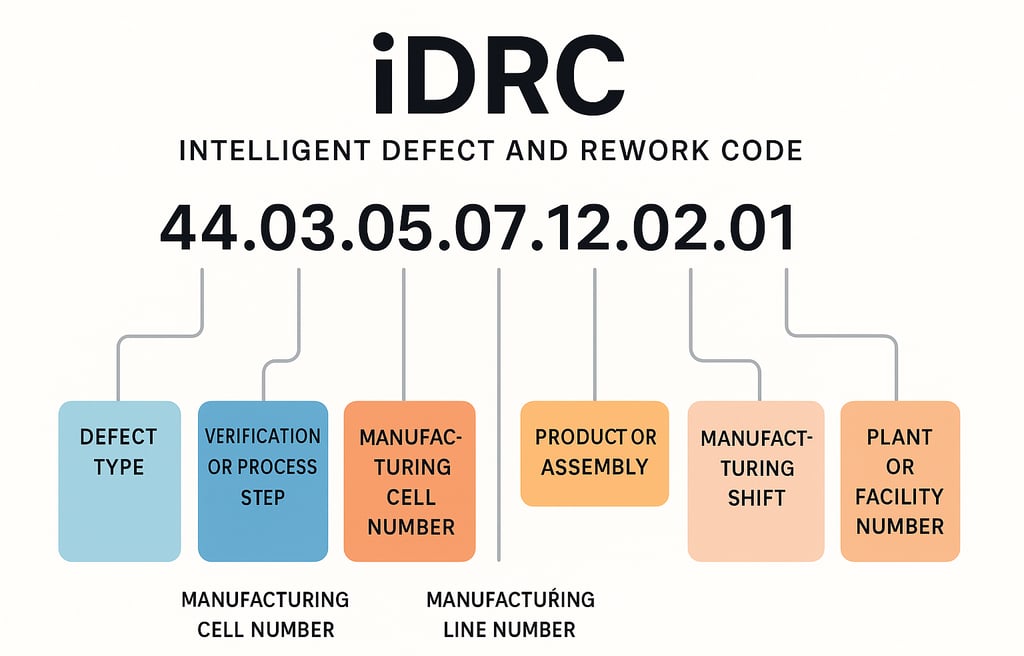
iDRC™ is a next-generation coding framework inspired by the structure of Internet Protocol (IP) addresses. Just as IP addresses help trace and locate devices online, iDRC™ enables manufacturers to trace defects across the production landscape—by product, process, location, and time.
A traditional defect code becomes a structured, multi-dimensional identifier. For example:
44.03.05.07.12.02.01
44 – Defect Type (e.g., Leak)
03 – Verification or Process Step
05 – Manufacturing Cell Number
07 – Line Number
12 – Product or Assembly Identifier
02 – Shift
01 – Plant or Facility Number
Each segment is customizable—enabling manufacturers to define what matters most in their traceability strategy
Key Benefits of iDRC™:
🔥 Plant Heat Maps
Visualize defects by zone, shift, or product family. Identify clusters of failure to prioritize improvements.
🔗 DFMEA Integration
Dynamically connect iDRC™ values to DFMEA failure modes. As defects are logged, real-time updates to occurrence ratings and Risk Priority Numbers (RPN) are possible.
🚀 Accelerated Root Cause Analysis
Structured defect data lets quality teams zoom in on systemic issues with precision—shortening investigation and containment timelines.
📊 Predictive Quality Analytics
iDRC enables historical pattern analysis, supports AI modeling, and facilitates preventive actions before defects escalate.
🛠️ Scalable & Flexible
iDRC™ is not one-size-fits-all. It flexes to the complexity of your operations—from a single-cell assembly line to a global multi-site production network.
Why iDRC™ Matters
Defect tracking should be more than a post-mortem. It should be a real-time quality intelligence system. With iDRC™, every defect code is a breadcrumb in the data trail—guiding teams back to the root of the problem and forward to permanent solutions.
In safety-critical industries like MedTech, Automotive, or Aerospace, the stakes are high. iDRC™ equips manufacturers to respond faster, comply better, and continuously improve.
Conclusion
With iDRC™, we don’t just log defects—we unlock insights.
By embedding location, process, and product metadata into every defect entry, iDRC™ transforms traditional rework tracking into a strategic driver of quality and operational excellence.
The iDRC™ framework was developed by Manfred Maiers, a seasoned expert in operational excellence and MedTech manufacturing. With decades of global experience in quality systems, traceability, and regulatory compliance, Manfred designed iDRC™ to bridge the gap between traditional defect tracking and the demands of modern, data-driven production environments. If you're interested in implementing iDRC™ in your organization—or exploring how this intelligent code structure can enhance your quality, compliance, and root cause analysis capabilities—you’re invited to connect directly with the author. Let’s turn your defect data into strategic insight.